Updated June 2026
If you have spent any time researching things to do in Japan, you may have come across the term “dry head spa.” It sounds unusual at first — a spa treatment for your head, but without water? The concept barely exists outside Japan, yet within the country it has become one of the most popular wellness treatments of the past decade. Millions of Japanese people visit dry head spa salons regularly, and increasingly, foreign visitors are discovering why.
This guide explains exactly what dry head spa is, how it works, what makes it different from a regular head spa, and how you can experience one yourself during a trip to Japan.
What Exactly is a Dry Head Spa?
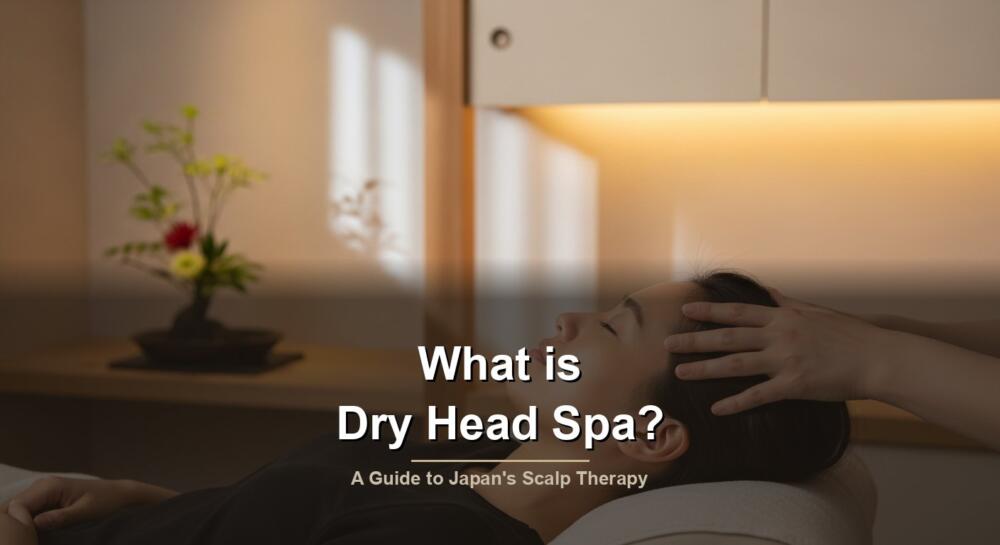
A dry head spa is a hands-only scalp massage treatment performed without water, shampoo, or any liquid products. The therapist uses their fingers, thumbs, and palms to work through the muscles of your scalp, temples, neck, and sometimes shoulders and face. Sessions typically last between 30 and 75 minutes, and the entire experience takes place in a reclining chair or on a treatment bed.
The Japanese term is “dorai heddo supa” (ドライヘッドスパ), a direct transliteration from English. Despite the borrowed name, the practice is deeply rooted in Japanese wellness culture and has very little equivalent in Western countries. In my experience visiting dozens of salons across Japan, no two therapists work in exactly the same way — but they all share a focus on slow, deliberate pressure applied to the head and surrounding areas.
The “Dry” Part — No Water, No Shampoo
The word “dry” is the key distinction. Unlike a traditional head spa at a hair salon — where warm water, shampoo, and scalp treatments are part of the process — a dry head spa uses nothing but the therapist’s hands. There is no shampoo bowl. Your hair stays completely dry throughout.
This matters for several practical reasons. You do not need to factor in drying or restyling time afterward. You can walk in wearing whatever you like and walk out looking exactly the same. There is no need to remove makeup or bring a change of clothes. What surprised me the first time I tried one was how much easier it made scheduling — I booked a session between sightseeing and dinner, and there was zero transition time needed.
Some salons do use a light herbal oil or aroma mist on the scalp, but this is minimal and does not leave hair wet or greasy. If you have any concerns about products, you can always request a fully product-free treatment.
Origins in Japan
Dry head spa as a distinct service category emerged in Japan in the early 2010s. Before that, head massage existed as part of broader bodywork traditions — acupressure (shiatsu), relaxation salons, and beauty treatments all included some head and scalp work. But the idea of a dedicated salon focused exclusively on the head, without water, was something new.
The concept took off partly because of Japan’s culture of overwork. Office workers dealing with chronic stress, poor sleep, eye strain from screens, and tension headaches needed something more targeted than a full-body massage. Dry head spa filled that gap: a focused treatment, usually 30 to 60 minutes, that could fit into a lunch break or an evening commute. By the mid-2010s, dedicated dry head spa chains were opening across Tokyo and Osaka. Today, the industry includes everything from small independent studios to national franchise brands.
There is also a cultural factor at play. Japanese people tend to value treatments that are quiet, precise, and focused. A dry head spa session is almost meditative — the room is dim, the therapist works slowly, and many clients fall asleep within the first ten minutes. This fits naturally into a culture that already embraces onsen (hot springs), forest bathing, and other restful practices.
The COVID-19 pandemic further accelerated the trend. With remote work increasing screen time and stress levels, and people becoming more conscious of personal wellness, demand for dry head spa grew significantly between 2020 and 2023. New salons opened even during periods of reduced foot traffic, and the treatment became a mainstream self-care option rather than a niche service. Today, it is common to see dry head spa salons in shopping districts, station buildings, and even airport terminals.
Dry Head Spa vs. Regular Head Spa — Key Differences
If you search for “head spa in Japan,” you will find two main types: dry head spa and what is often called “wet” head spa or simply “head spa.” They sound similar but the experience is quite different. Here is a direct comparison.
| Feature | Dry Head Spa | Regular (Wet) Head Spa |
|---|---|---|
| Water usage | None — completely dry treatment | Warm water rinse, shampoo, sometimes steam |
| Typical duration | 30–75 minutes | 60–120 minutes (includes wash and dry) |
| What you wear | Your own clothes, no change needed | Salon gown or cape; hair gets wet |
| Primary focus | Relaxation, tension release, sleep improvement | Scalp cleansing, hair health, product treatment |
| Aftereffect on hair | Hair unchanged — walk out as you arrived | Hair is washed, dried, and often styled |
| Where to find it | Dedicated dry head spa salons, relaxation salons | Beauty salons, hair salons, some hotel spas |
| Price range | 3,000–8,000 yen (30–60 min) | 5,000–15,000 yen (60–90 min) |
The simplest way to think about it: a wet head spa is primarily a hair and scalp care treatment. A dry head spa is primarily a relaxation and stress-relief treatment. Both feel wonderful, but they serve different purposes.
For tourists, the dry version is often the better choice simply because of convenience. You do not need to plan around having wet hair, and sessions are shorter. In my experience, the relaxation effect of a dry head spa is also more immediate — most people feel a noticeable shift in tension within the first fifteen minutes.
That said, both types are worth trying if your schedule allows. A wet head spa offers its own kind of pleasure — the warm water, the thorough cleansing, the sensation of having every pore on your scalp refreshed. If you are in Japan for a week or longer, consider trying a dry head spa early in your trip for quick relaxation, and saving a wet head spa for a day when you have more free time and do not mind having your hair restyled.
What Happens During a Session?
If you have never been to a dry head spa, the process can feel mysterious. Here is what actually happens, step by step.
Before the Session
You arrive at the salon and check in at the reception desk. Most salons will ask you to fill out a brief questionnaire — even if it is in Japanese, the questions are usually about your physical condition (any headaches, stiff shoulders, areas of concern) and your preferences (pressure level, areas to focus on).
You will not need to change clothes. Some salons offer a light blanket or ask you to remove your shoes. If you are wearing earrings, a necklace, or glasses, the therapist may ask you to remove them for comfort.
The therapist will typically ask about your preferred pressure level. In Japanese, this is usually phrased as “tsuyosa wa dou shimasu ka?” (How would you like the pressure?). Common responses are “futsuu” (normal), “tsuyome” (stronger), or “yowame” (lighter). Even pointing to a scale works fine.
The Treatment (Step by Step)
You recline in a chair — usually a zero-gravity style recliner that tilts your body back with your legs slightly elevated. The lights dim. Soft ambient music or nature sounds play in the background. Some salons use an eye pillow or warm towel over your eyes. The room temperature is kept slightly warm, and a light blanket may be placed over your body.
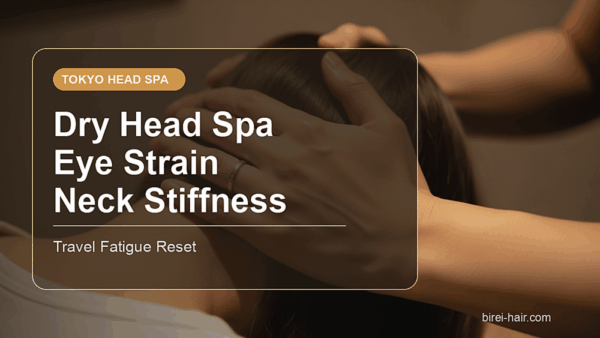
The therapist begins at the top of your head, using their fingertips and thumbs to apply slow, rhythmic pressure across your scalp. They work in sections: the crown, the sides above your ears, the temples, and the base of the skull where the neck meets the head. This last area — the occipital ridge — is where most people carry significant tension, and the therapist will often spend extra time here.
The pressure is firm but not painful. It feels nothing like a regular scalp scratch or a quick head rub. The movements are deliberate, sometimes circular, sometimes pressing and holding on specific points. In many salons, the technique draws from acupressure traditions, targeting tsubo (pressure points) associated with stress relief and improved circulation.
Midway through the session, the therapist may move to your neck, shoulders, and the area around your jaw. Some treatments include gentle work along the forehead and around the eye sockets. This combination addresses the connected muscle groups that contribute to headaches, eye strain, and facial tension. A few salons also incorporate ear massage or decollete work, though these tend to be part of longer or premium courses.
The pace throughout is slow and unhurried. There is no rushing from one area to the next. Each section receives thorough attention before the therapist moves on. This rhythm — combined with the darkened room and warmth — creates a cocoon-like environment that makes it very difficult to stay awake.
Most people begin drifting off within 10 to 15 minutes. This is completely normal and even expected — many dry head spa salons in Japan explicitly market the treatment as a way to achieve “brain rest” (脳休) or “intentional napping” (寝落ち体験). Falling asleep is considered a sign that the treatment is working, not something to resist.
After the Session
The therapist will gently wake you — often by gradually lightening the pressure and then speaking softly. The chair returns to an upright position. You are given a moment to reorient.
Many salons offer a cup of herbal tea or water after the session. The therapist may share brief observations about your scalp condition — whether it felt tense, soft, or if certain areas seemed particularly stiff. This feedback is usually given in Japanese, but even without full comprehension, the gestures and context make it understandable.
You pay at the front desk, put your shoes back on, and walk out. The entire visit — from arrival to departure — typically takes 45 to 90 minutes depending on the treatment length. There is no residual smell, no wet hair, no product residue. You simply feel lighter.
One thing worth mentioning: the post-session feeling is distinct from what you get after a body massage. There is less of that heavy, sleepy sensation and more of a clear-headed calm. Colors seem brighter. Your eyes feel more open. In my experience, this effect lasts for several hours, sometimes into the following morning if the session was in the evening.
Benefits — Why People Keep Coming Back
Dry head spa is not a medical treatment, and no salon will make clinical claims. That said, the reasons people return regularly are consistent and well-documented through customer feedback across hundreds of salons in Japan.
In my experience, the most immediate and universal benefit is simply how different you feel walking out compared to walking in. There is a tangible sense of mental clarity and physical lightness that is difficult to achieve through other relaxation methods in such a short time.
It is also worth noting that many of these benefits compound with repeat visits. People who go regularly — once a week or once every two weeks — tend to report more sustained improvements in sleep and stress management. But even a single session during a trip to Japan will give you a clear sense of what the fuss is about.
Where to Find Dry Head Spa in Tokyo
Tokyo has more dry head spa options than any other city in the world. The challenge is not finding one — it is choosing the right type for your needs.
Dedicated Dry Head Spa Salons
These are salons that focus exclusively on dry head spa treatments. They do not cut or color hair, they do not offer body massages, and they do not use water. Everything is designed around the head spa experience: the chairs, the lighting, the sound environment, and the training of the therapists.
Dedicated salons tend to offer the best treatment quality because their staff specialize in this single discipline. You will find them in most major commercial areas of Tokyo, often on upper floors of buildings near train stations. They are sometimes small — just two to four treatment chairs — which adds to the quiet, intimate atmosphere.
Look for salons that have been operating for several years and have consistently high reviews on Hot Pepper Beauty. Newer franchise locations can be competent, but the independent studios run by experienced therapists tend to deliver the most refined treatments. Do not be put off by the small size or understated entrance — in Japan, some of the best experiences are hidden behind modest doors.
Beauty Salons with Head Spa Menus
Many hair salons and beauty salons in Tokyo have added dry head spa as a menu option, either as a standalone treatment or as an add-on to a haircut or color session. The quality varies more widely here. Some salons have therapists with genuine head spa training; others treat it as a basic scalp massage.
If you go this route, look for salons where the head spa menu has its own dedicated pricing and duration (30 minutes or longer). A 10-minute add-on is not the same experience as a proper session. The best indicator is whether the salon has a separate head spa therapist on staff, rather than having hairstylists perform the treatment between appointments.
Hotel Spa Facilities
A smaller number of hotel spas in Tokyo now include dry head spa or head-focused treatments on their menus. These tend to be at higher-end hotels and the pricing reflects that — sometimes double or triple what you would pay at a standalone salon. The advantage is convenience, English-speaking staff, and a familiar booking process.
If your hotel has a spa, it is worth asking whether they offer a head-focused treatment. Even if they do not call it “dry head spa” specifically, many hotel spas now include scalp and head massage options inspired by the same techniques. The experience may not be identical to a dedicated salon, but it removes the barrier of navigating an unfamiliar booking system in a foreign language.
For most visitors, a dedicated dry head spa salon offers the best combination of quality, authenticity, and value. The areas listed below all have multiple options within walking distance of major train stations.
Beyond Tokyo: Dry head spa is not limited to the capital. Osaka, Kyoto, Fukuoka, and Nagoya all have dedicated salons, and the booking process works the same way through Hot Pepper Beauty. If your travels take you outside Tokyo, you can search by city name on the platform and find options near your accommodation.
How to Book as a Tourist
Booking a dry head spa in Japan as a non-Japanese speaker is easier than it used to be, but there are still a few things worth knowing.
Hot Pepper Beauty (with English Tips)
The dominant booking platform for salons in Japan is Hot Pepper Beauty (hotpepper.jp). Almost every dry head spa salon lists their menus, prices, available time slots, and reviews here. The site is primarily in Japanese, but Google Translate handles it reasonably well.
To search, enter the area name (Shinjuku, Ginza, etc.) and look for “ドライヘッドスパ” in the treatment category. Each salon page shows photos, menu options with prices, and a calendar for available time slots. You can book directly through the site — it sends a confirmation to the salon.
When filling out the booking form, there is usually a free-text field for requests. Writing a brief note in English is fine — many salon staff can read basic English even if they cannot speak it fluently. Something like “First time, tourist, lighter pressure please” gives the salon enough context.
One useful trick: if you find a salon you like but the booking form feels overwhelming, try copying the salon name and pasting it into Google Maps. Many salons also accept bookings through their Google Business listing, and the interface there is often simpler and already translated.
Walk-in vs. Reservation
Walk-ins are possible at some salons, especially on weekday afternoons. However, dedicated dry head spa salons often have limited chairs — sometimes only two or three — so availability without a reservation is unpredictable. Making a booking at least one day in advance is recommended, especially for weekend visits or if you want a specific time slot.
If you do want to try walking in, the phrase “ima aitemasu ka?” (今空いてますか? — Are you available now?) works well. Even showing the question on your phone screen in Japanese text is effective.
Weekday afternoons between 2:00 and 4:00 pm tend to have the best walk-in availability. Evenings after 6:00 pm and weekends are the busiest times, as local office workers fill the slots after their workday.
What to Know Before Your Visit
A few practical details that make the experience smoother for first-time visitors from overseas.
Language: Most dry head spa salons operate primarily in Japanese. However, the treatment itself requires very little verbal communication — you lie down, the therapist works, and you relax. Basic gestures for pressure adjustment (thumbs up for more, palms down for less) work universally. Some salons in tourist-heavy areas like Shinjuku and Ginza have staff with basic English.
Tipping: There is no tipping in Japan. Do not leave extra money or try to hand cash to the therapist. The price you see on the menu is the price you pay (tax may or may not be included — check the listing).
Timing: Arrive 5 to 10 minutes early for your first visit to complete the intake questionnaire. Sessions start and end on time. If you arrive late, your treatment time may be shortened rather than extended.
Payment: Most salons accept credit cards, but some smaller independent salons are cash-only. Check the Hot Pepper Beauty listing — it usually indicates accepted payment methods. Having some yen on hand is always a good backup plan in Japan.
What to bring: Nothing special. Come as you are. If you wear contact lenses, you may want to bring your glasses case — some salons ask you to remove contacts before placing an eye pillow. Otherwise, just bring yourself and a willingness to sit still for an hour.
Useful Japanese Phrases
You do not need to speak Japanese to enjoy a dry head spa, but knowing a few phrases can make the experience smoother and show the salon staff that you respect their culture.
| English | Japanese | When to use |
|---|---|---|
| I have a reservation | 予約しています(yoyaku shiteimasu) | Arrival |
| 60 minutes, please | 60分でお願いします(rokujuppun de onegai shimasu) | Booking or arrival |
| Normal pressure | 普通でお願いします(futsuu de onegai shimasu) | Before treatment |
| A little lighter, please | もう少し弱くしてください(mou sukoshi yowaku shite kudasai) | During treatment |
| A little stronger, please | もう少し強くしてください(mou sukoshi tsuyoku shite kudasai) | During treatment |
| That feels great | 気持ちいいです(kimochi ii desu) | During treatment |
| Can I pay by card? | カードで払えますか?(kaado de haraemasu ka?) | Payment |
| Thank you very much | ありがとうございました(arigatou gozaimashita) | After the session |
Pronunciation tip: Japanese pronunciation is straightforward for English speakers. Each vowel has one sound: a as in “father,” i as in “key,” u as in “blue,” e as in “bed,” o as in “go.” Consonants are similar to English. Even approximate pronunciation will be understood and appreciated.
Frequently Asked Questions
Staff Insights | What the Pros Say
We asked the staff at “Koutei no Ikinuki” (Emperor’s Break), a head spa specialty salon, about common questions from visitors.
Pro Tips
Why Head Spa Works for Stiff Shoulders & Eye Strain
Read more →
First Timer’s Guide
Your First Head Spa: What to Prepare & What to Expect
Read more →
Related English Guides
- Best Head Spa for Couples in Asakusa & Ueno
- Head Spa in Kyoto: 5 Best Salons for Tourists
- Head Spa in Osaka: 6 Best Salons for Tourists
- Couples Head Spa in Yokohama: 5 Best Salons
- Couples Head Spa in Tokyo: Where to Book
- Dry Head Spa for Eye Strain & Neck Stiffness
- Tokyo Head Spa for Tourists: What to Expect
- Shinjuku Head Spa Guide: How to Choose
Final Thoughts
Dry head spa is one of those Japanese experiences that is difficult to explain but immediately understood once you try it. It is not flashy. There are no exotic ingredients, no dramatic before-and-after results, no Instagram moments. You walk into a quiet room, lie down, close your eyes, and for the next hour, someone applies careful, practiced pressure to the muscles you did not realize were holding all your tension.
For travelers, it fills a gap that most tourist itineraries miss. Between the temples, the ramen shops, the train transfers, and the constant navigation, your head and eyes are working harder than you realize. A single dry head spa session can reset that accumulated fatigue in a way that an extra hour of sleep at the hotel simply cannot. And because there is no water, no changing, no drying time, it fits into even the busiest travel day without disruption.
If you are visiting Japan and want to experience something genuinely Japanese — something that millions of locals do regularly but that barely exists anywhere else in the world — a dry head spa is worth an hour of your trip. Book one session, see how you feel, and do not be surprised if you find yourself searching for a second appointment before your trip is over. Many visitors tell me the same thing: it became the unexpected highlight of their time in Japan.

コメント